Skip to content
Back to Sunrun Blog
Photovoltaic (PV): Definition, How it Works, and Examples
SHARE TO SOCIAL MEDIA
Photovoltaic (PV) refers to technology that converts sunlight directly into electricity using semiconductor materials. It is the core technology behind solar panels used in residential and commercial energy systems.
Photovoltaic systems are widely used because they generate electricity without moving parts, fuel, or direct emissions.
What does photovoltaic mean?
The term “photovoltaic” comes from “photo” (light) and “voltaic” (electricity). It describes the process of converting sunlight into usable electrical power.
This conversion happens at the material level inside a solar cell, making photovoltaic technology a direct and efficient way to generate electricity from the sun.
How photovoltaic technology works
Photovoltaic systems generate electricity through the photovoltaic effect:
Sunlight hits a solar panel and is absorbed by semiconductor materials (typically silicon)
Energy from the light knocks electrons loose within the material
These electrons flow through an electric field, creating direct current (DC) electricity
An inverter converts DC electricity into alternating current (AC) for home use
This process happens instantly whenever sunlight reaches the panels.
Where photovoltaic systems are used
Photovoltaic technology is used in a wide range of applications, including:
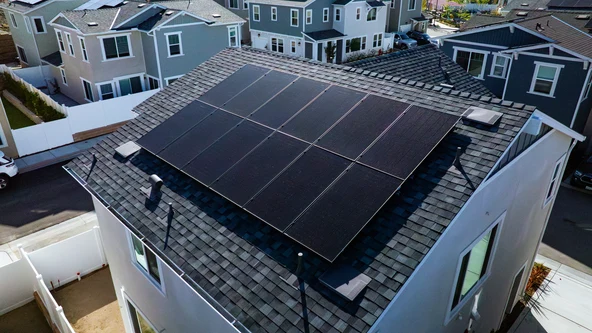
Residential solar systems installed on rooftops
Commercial and industrial buildings generating on-site power
Utility-scale solar farms supplying electricity to the grid
Small-scale devices like calculators, lights, and sensors
In homes, PV systems are often paired with battery storage to help manage energy use during outages or when grid power is unavailable.
Photovoltaic vs. solar thermal
Photovoltaic systems are one type of solar technology, but not the only one:
Photovoltaic (PV): Converts sunlight directly into electricity
Solar thermal: Uses sunlight to generate heat (for water heating or electricity production)
Most residential solar installations in the United States use photovoltaic systems.
Why photovoltaic technology matters
Photovoltaic systems play a key role in modern energy systems because they:
Generate electricity without fuel or direct emissions
Scale easily from small devices to large energy systems
Support decentralized, on-site energy generation
Reduce reliance on traditional grid electricity sources
As adoption grows, PV technology continues to be a primary driver of residential solar energy.
Photovoltaic systems for homeowners
For homeowners, photovoltaic (PV) systems convert sunlight into usable electricity directly at the home, reducing reliance on grid-supplied power during daylight hours.
PV systems can be designed to work alongside battery storage, helping store excess solar production for use at night or during outages.
GO SOLAR
Take control of your energy bills
Reliable power, predictable energy bills
Sources
1. https://www.energy.gov/cmei/systems/solar-photovoltaic-technology-basics